A belt drive versus chain decision is not about choosing the newest-looking part. It changes how a mountain bike carries its mass, deals with mud, responds to a pedal strike and asks to be maintained after a long, wet ride.
For riders who spend their weekends climbing into the mountains and descending rough singletrack, those differences are real. A conventional chain drivetrain remains the benchmark for broad gear range, low weight and instant familiarity. A belt, usually paired with a gearbox or hub gear, offers a very different proposition: a quiet, clean and highly durable transmission with fewer exposed moving parts. Neither is automatically better. The right answer depends on where and how you ride.
What changes between a belt and a chain?
A chain transfers power through metal rollers engaging with teeth on a chainring and sprockets. It can run through a derailleur, where it moves across a cassette to select gears, or it can drive a gearbox. It is efficient, compact and proven under enormous race-level loads. It is also exposed. Grit, water, impacts and wear all have a say in how it performs.
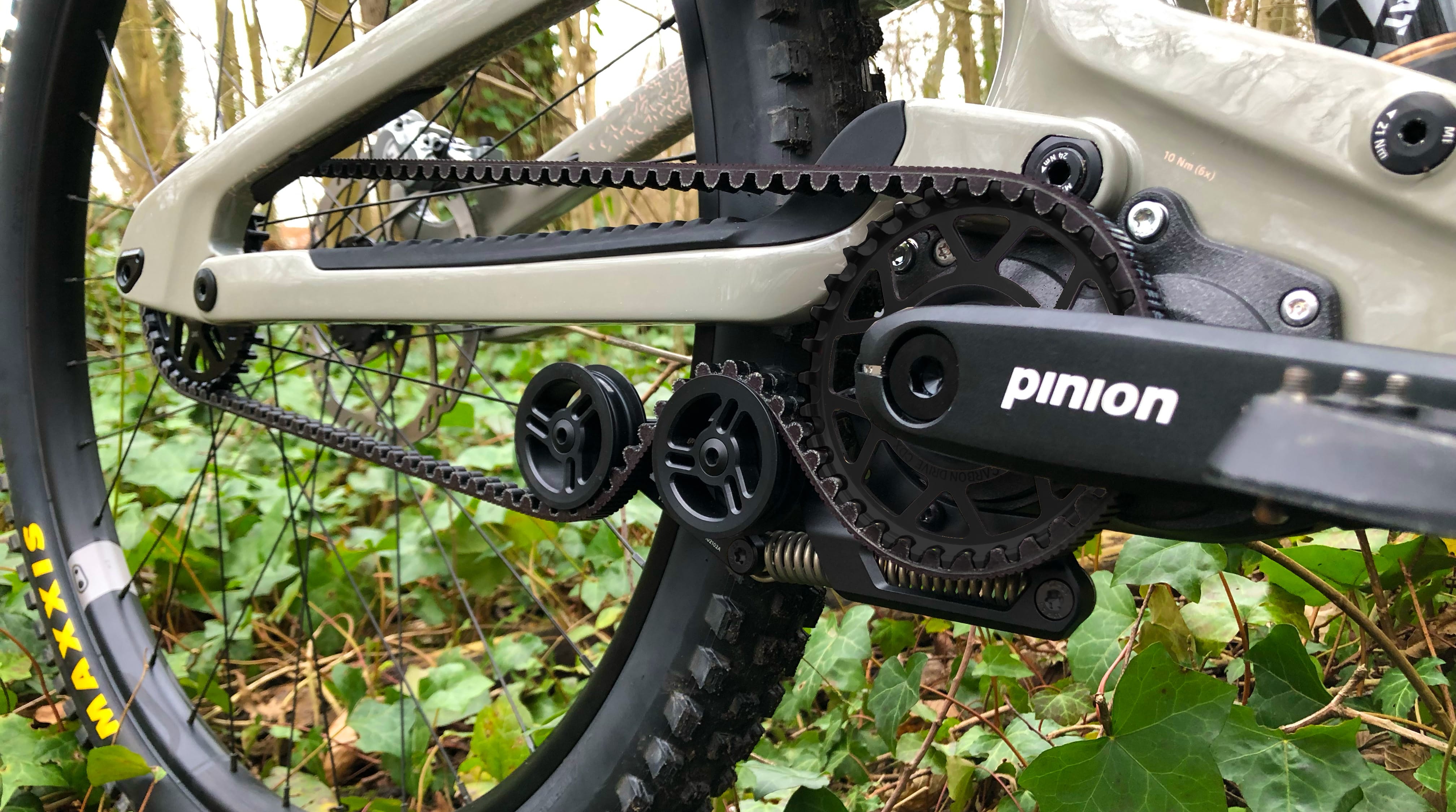
A toothed belt is made from a high-strength composite, commonly reinforced with carbon fibres. It runs on matching pulleys and cannot be split like a chain. That last point matters. A frame designed for a belt needs a separable rear triangle or another engineered opening so the belt can be fitted. It also needs accurate belt tension and a stable drivetrain line.
On a hardtail rolling through dry woodland, those requirements are easy to live with. On a long-travel mountain bike being pushed through rock gardens, deep compression and filthy winter conditions, they demand serious engineering. The frame, pivot layout and drivetrain architecture must work together. There is no place for a casual compromise.
Belt drive versus chain on real trails
The most useful comparison begins away from the workstand. Think about the moments that shape a ride: the first steep climb, the clatter of loose stones beneath the bottom bracket, the silent stretch of forest after rain, and the final descent when fatigue starts to pull at your technique.
Pedalling feel and efficiency
A clean, correctly lubricated chain is exceptionally efficient. Under steady power, it wastes very little energy. This is one reason derailleur drivetrains still dominate racing, where low mass, wide range and efficiency are difficult to beat.
A belt will feel a little less direct. But there is no rattling derailleur cage beneath the chainstay and no chain travelling across a cassette. The sensation is calm and composed. Yet belt tension affects drag more noticeably than chain tension. Set it too tight and efficiency suffers; too loose and the belt can skip under a hard torque spike.
For a rider chasing every second on a cross-country course, a chain still makes a compelling case. For a rider who values consistent, quiet drive through long days of climbing and descending, the small theoretical difference is often less relevant than the whole-bike experience.
Shifting under pressure
With a derailleur, a chain can shift while you are pedalling. That is a major advantage when the trail changes abruptly and you need an easier gear before the gradient bites. Modern systems shift impressively well under load, but they still reward a brief softening of pedal force.
A belt itself does not shift. Its gearbox or hub does. With a Pinion gearbox, shifts are made internally and the gear steps are protected from rocks and mud. You normally reduce pressure through the pedals for a clean shift, but you can also select a gear while stopped. Stall halfway up a technical climb, put a foot down, select an easier ratio and restart. No bent derailleur. No chain forced across sprockets while everything is under strain.
That is not a universal victory. Riders accustomed to firing through gears under full power may prefer a derailleur. But on technical terrain, the ability to shift independently of the rear wheel and without exposing a derailleur can be a genuine advantage.
Unsprung mass and suspension response
A derailleur, cassette and much of a conventional drivetrain sit at the rear wheel. That adds unsprung mass – weight the suspension must control as the wheel reacts to roots, braking bumps and square-edged hits.
A gearbox moves much of that mass towards the centre of the bike. Paired with a belt, it leaves a simple rear pulley at the wheel. The potential benefit is a rear end that can react more freely and track the ground with less inertia. On rough descents, that can mean more grip and a calmer bike beneath you.
It is not as simple as declaring every gearbox bike better suspended. Pivot placement, leverage curve, shock tune, wheel weight and rider setup remain decisive. But centralising drivetrain mass is a purposeful choice for a bike built to hold a line when the trail is trying to knock it away.
Mud, water and impact resistance
Chains thrive when cleaned and lubricated, but abrasive paste made from grit and old lubricant accelerates wear. A wet ride can become a cleaning session, particularly if you want crisp shifting and a long cassette life.
A belt needs no oil. It does not rust, does not coat your calf in black marks and is largely happy with a rinse. That makes it attractive for riders who ride through winter rather than merely talk about it. It is also quiet. Without a chain slapping across stays, the bike sounds more like tyres, suspension and the ground beneath them.
Still, belts are not maintenance-free. Check tension, pulley alignment and wear. Clear packed debris after a proper mud day. Inspect the belt for damage after a heavy impact. A sharp stone forced between belt and pulley is uncommon, but not impossible. The point is reduced routine maintenance, not mechanical invincibility. If you ride a lot of mud, then the chain is your best choice.
The frame matters as much as the transmission
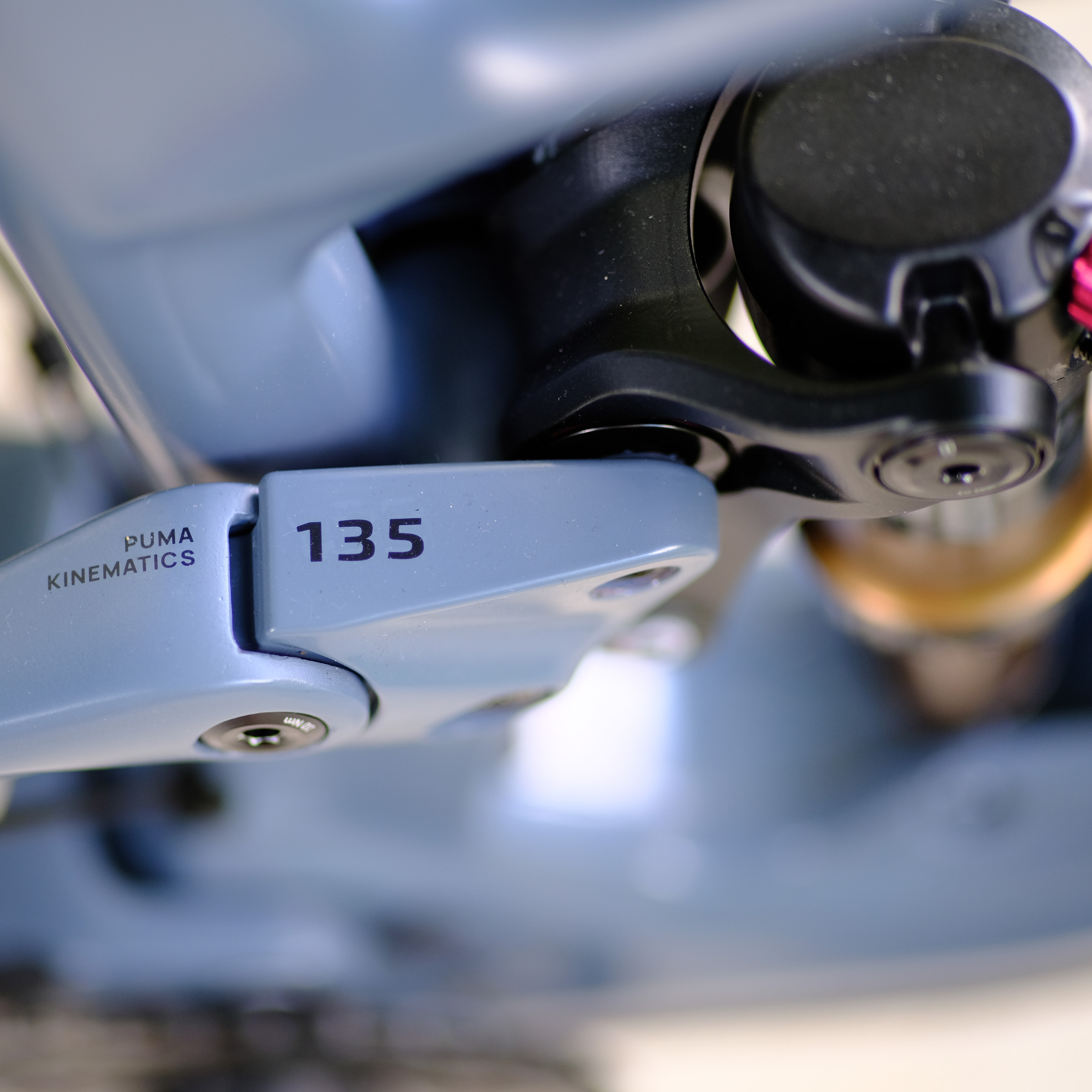
A belt drive makes little sense as an afterthought. It asks more from frame design than a chain does, especially on a full-suspension bike. Belt tension must remain controlled throughout the travel, or the suspension system needs to be designed around the changing distance between the gearbox output and rear axle.
This is why a gearbox and belt belong together when the brief is technical mountain biking. The system can centralise mass, protect the gearing and simplify the rear triangle, but only if its kinematics are resolved from the first sketch. A belt fitted to an unsuitable frame is a novelty. A belt integrated into the chassis is a drivetrain decision with consequences for handling.
The same principle shapes the Kodiak platform from INSTINCTIV. Its Pinion C1.12 gearbox is not there to decorate a specification sheet. It allows the bike to carry its drivetrain mass centrally, protect its gears and keep the rear end focused on traction when the trail gets violent.
When a chain remains the right choice
A chain drivetrain is not old technology waiting to be replaced. It is the sensible choice for many mountain bikers. It offers a huge ecosystem of parts, straightforward trailside repairs and broad gearing options. If you travel often, race frequently or want your local shop to have every likely replacement part on hand, a conventional chain and derailleur setup is hard to argue against.
It also gives riders enormous freedom to fine-tune cassette range, chainring size and shifting components. For lightweight trail bikes and race-oriented builds, that adaptability has value. A damaged chain can be shortened or joined at the roadside. A belt cannot. Carrying a spare belt on a remote trip is possible, but it is a different level of planning.
Choose a chain when maximum versatility, low system weight and shifting while pedalling are your priorities. Maintain it properly and it will reward you with fast, precise performance.
When a belt is worth choosing
Choose a belt when you want fewer exposed drivetrain parts, less cleaning and a quieter ride. It is particularly convincing for riders who value a gearbox, ride in persistent wet conditions or repeatedly hit rocky trails where derailleur vulnerability is more than a theoretical concern.
It also suits the rider who keeps a bike for years. The purchase price and frame-specific design are more demanding, but the ownership experience can be refreshingly simple. Wash the bike, check the belt, inspect the pivots and go again. More time in dust, rain and high mountain air. Less time working black paste out of jockey wheels.
The deciding question is not whether belts are modern and chains are traditional. Ask what you need the bike to do when the route is steep, the weather turns and the descent has no sympathy for fragile equipment. Choose the drivetrain that lets you concentrate on the next corner, not the machinery beneath your feet.