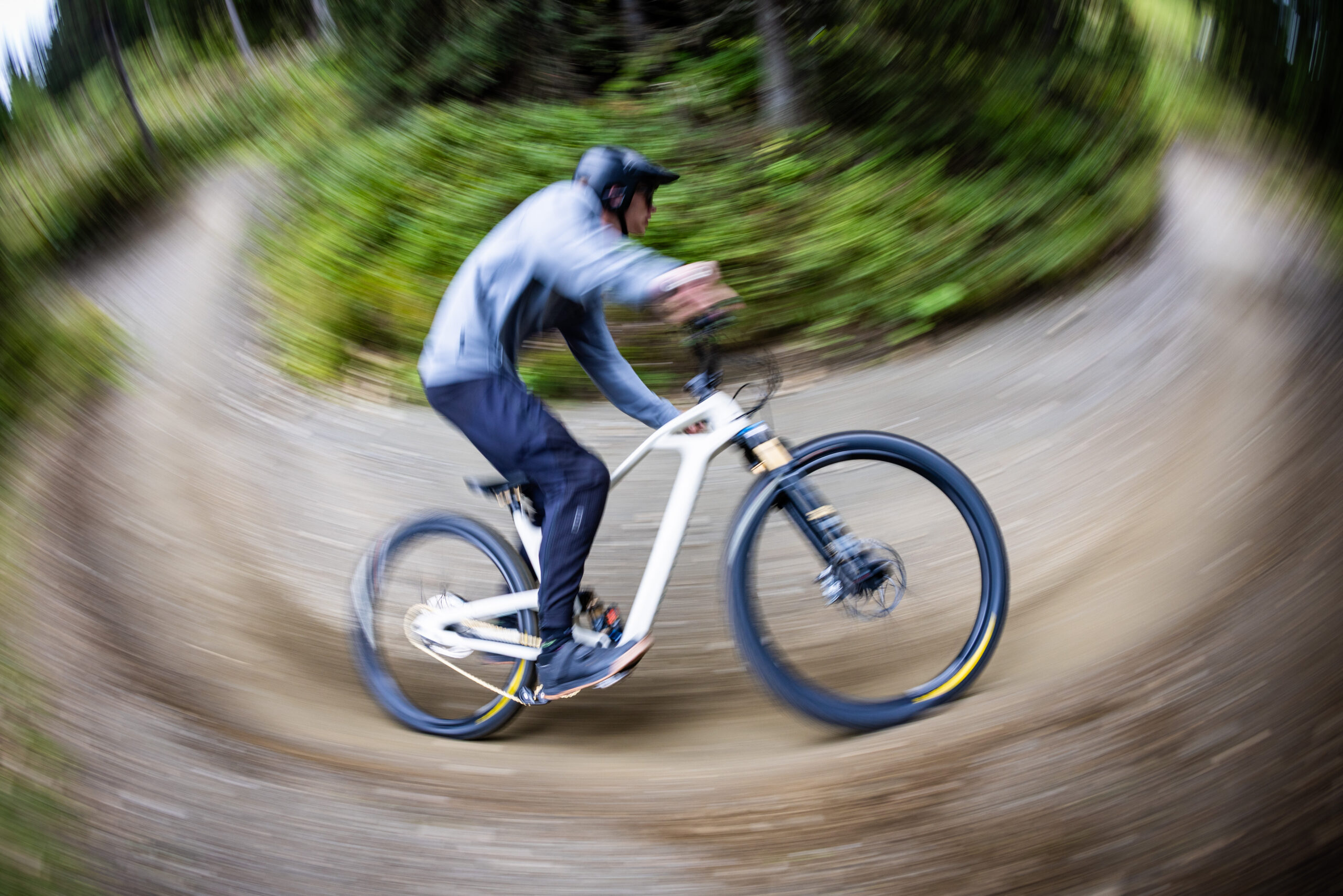
A made in Europe mountain bike is not simply a statement about origin. For serious riders, it usually signals something more specific – tighter manufacturing control, shorter feedback loops between design and production, and a bike shaped by real terrain rather than global volume targets.
That distinction matters more at the premium end of the market, where small changes in frame behavior, drivetrain layout, suspension integration, and serviceability have a direct effect on how a bike rides over a long season. If you are looking at European-built mountain bikes, you are probably not chasing the cheapest option. You are trying to understand whether the bike justifies its price in engineering, durability, and ride quality.
What a made in Europe mountain bike really means
The phrase gets used loosely. In some cases, it means final assembly happens in Europe while frame production, subassemblies, and much of the supply chain sit elsewhere. In other cases, it means the bike is genuinely designed, welded, finished, painted, and built within Europe, often with regional components and a closer relationship between the people who ride, design, and manufacture it.
Those are very different propositions.
A genuinely European-built bike tends to come from a smaller manufacturer with a more focused product range. That usually means fewer annual model changes, less pressure to follow short-lived trends, and more attention paid to platform maturity. The upside is coherence. The frame, kinematics, fit, and component choices often feel considered as one system rather than assembled around a marketing brief.
The trade-off is obvious. Boutique production is more expensive, lead times can be longer, and your options may be more specialized than what you find from mass-market brands with broad dealer networks.
Why riders seek out a made in Europe mountain bike
For experienced riders, the appeal is rarely patriotic. It is practical.
First, manufacturing proximity improves feedback. When the design team, test terrain, and production floor are relatively close to each other, revisions happen faster and with fewer compromises. A pivot location, motor mount, cable path, or belt line can be refined because the people making decisions are close to the hardware.
Second, premium European builders often design around demanding terrain. Alpine riding exposes weaknesses quickly. Long descents punish heat management and chassis stability. Steep technical climbing reveals drivetrain behavior, weight distribution, and suspension efficiency. Wet conditions test sealing, tolerances, and long-term reliability. A bike developed in that environment tends to carry a certain seriousness.
Third, there is the question of ownership. Riders who put in real mileage do not just care about first impressions. They care about bearing life, shifting consistency under load, frame protection, drivetrain wear, and whether the bike still feels tight after a hard season. This is where smaller European manufacturers often stand apart. They are not only selling a silhouette or a spec sheet. They are selling a platform.
Engineering quality is where the value lives
A premium frame should do more than look clean in photos. It needs to hold a line under load, stay composed in repeated impacts, and preserve traction without dulling rider input. That level of performance comes from design discipline as much as material choice.
On a high-end made in Europe mountain bike, you should look closely at how the frame is conceived as a complete system. That includes suspension kinematics, anti-squat targets, geometry under sag, packaging around modern drivetrains, and protection from contamination and impact. The best bikes are not overbuilt everywhere. They are reinforced where the loads demand it and refined where ride feel is shaped.
This is also where European boutique builders often justify their premium positioning. They can afford to make decisions that do not scale well for mass production. Build-to-order manufacturing, lower-volume frame finishing, tighter assembly standards, and more deliberate quality control are expensive. They also tend to produce better bikes.
Not always, of course. European origin alone does not guarantee excellence. A mediocre design built locally is still a mediocre design. But when a strong platform is paired with in-house production discipline, the result can be exceptional.
Components matter as much as the frame
A made in Europe mountain bike becomes more compelling when the build reflects the same philosophy as the chassis. Regional sourcing is not inherently better, but it often aligns with brands that care about system integrity rather than headline spec.
That matters especially in drivetrain and motor integration. Many premium riders are moving away from disposable complexity and toward systems that improve durability and reduce maintenance without sacrificing performance. Gearbox platforms, carbon belt drives, and compact full-power eMTB systems are part of that shift.
A gearbox-driven mountain bike, for example, changes more than service intervals. Centralized mass improves handling. The unsprung rear end can move more freely. Shifting consistency remains stable in poor conditions, and the overall bike tends to stay quieter and cleaner over time. The trade-off is that gearbox platforms require careful frame engineering and a manufacturer that understands how to build around them properly.
The same is true for lightweight full-power eMTBs. A low-weight motor system with refined power delivery can create a much more natural ride than a heavier, brute-force package. But integration is everything. Battery placement, frame stiffness, cooling, and suspension balance all influence whether the bike feels precise and composed or merely powerful.
This is where a specialist builder can outperform a larger brand. A focused manufacturer is more likely to optimize the complete platform around a specific system rather than simply adapting an existing frame to fit a current drivetrain trend.
The ride feel is different – and that is the point
The best European-built bikes tend to feel intentional. Not soft in one area and harsh in another. Not fast only on smooth test loops. Intentional.
That usually shows up in small ways first. The bike settles into corners rather than fighting the rider. It tracks off-camber terrain with less correction. It stays composed when the trail gets repeated and ugly, not just dramatic and steep. Pedaling support feels useful rather than intrusive. On an eMTB, power delivery complements the chassis instead of overwhelming it.
These qualities are difficult to quantify in a spec table. They come from platform cohesion.
For riders who spend long days in technical terrain, that cohesion matters more than a flashy component list. A bike that remains stable under fatigue, requires less mechanical attention, and keeps its handling character across varied terrain is worth more than a bike that wins the showroom comparison and loses over six months of ownership.
What to check before you buy
If you are evaluating a made in Europe mountain bike, ask direct questions. Where is the frame actually produced? Is the bike assembled to order or built in batches? Which parts of the system are proprietary, and how are spares supported? How was the platform developed, and for what terrain?
It is also worth asking whether the bike was designed around the drivetrain it uses or merely adapted to it. A gearbox frame, belt-drive layout, or lightweight full-power eMTB system needs to be native to the platform if you want the real advantages.
Support matters too. Premium buyers do not need hand-holding, but they do need competent guidance. Frame sizing, suspension setup, demo access, and original parts availability are all part of the ownership equation. A specialist manufacturer should be able to speak clearly about each.
Among European builders, this is where companies such as INSTINCTIV stand out. The value is not just that the bikes are hand-made in Europe. It is that the manufacturing approach, drivetrain choices, and ride priorities are aligned around performance in demanding real-world terrain.
Is it worth paying more?
Sometimes yes, sometimes no.
If your priority is maximum value per dollar on paper, a made in Europe mountain bike may not be the rational choice. Large global brands can offer aggressive specifications and wider dealer availability for less money. That matters for many riders.
But if you care about exclusivity, advanced platform design, lower maintenance, and a bike that feels engineered rather than marketed, the equation changes. At that point, the premium is not about a badge. It is about build philosophy, long-term ownership, and a ride character that mass-market bikes often struggle to match.
The strongest European bikes are for riders who notice details and ride hard enough to benefit from them. If that sounds like you, look past the country-of-origin label and focus on the platform behind it. That is where the real difference begins.