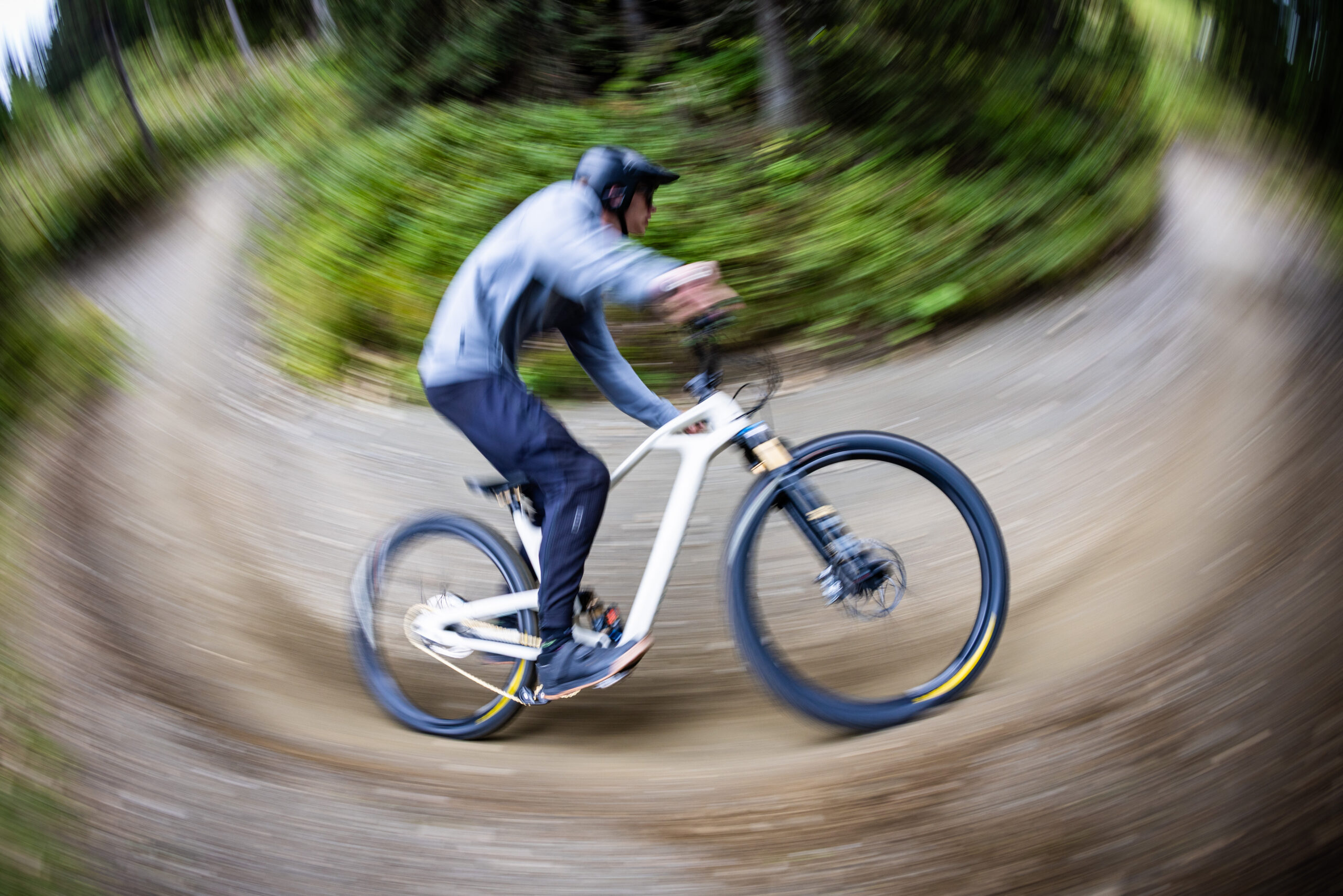
A premium build can look impressive in a parking lot and still feel ordinary once the trail turns steep, rough, and fast. That is the real filter for high end mountain bikes – not logo density, not price inflation, but what happens when line choice gets critical, braking zones get violent, and the bike needs to stay calm under a committed rider.
At the top end of the market, the differences are rarely superficial. They show up in frame kinematics, drivetrain architecture, weight distribution, chassis stiffness, service intervals, and the consistency of the ride after months of hard use. For experienced riders, that is where value lives.
What separates high end mountain bikes from expensive ones
The easiest mistake in this category is confusing premium parts with a premium platform. A bike can carry carbon wheels, wireless shifting, and boutique suspension, yet still be held back by a frame layout that lacks balance or a geometry package that chases trends instead of solving real riding problems.
A genuinely high-end bike starts with the structure. The frame needs to deliver precise tracking without feeling harsh, maintain composure when speeds rise, and preserve traction when the ground gets broken and off-camber. Suspension performance matters just as much. Not in isolation, but as part of the whole system. Anti-squat, leverage progression, support in the mid-stroke, and recovery from repeated impacts all shape how fast and how confidently a bike can be ridden.
The next separator is mechanical integrity. Many riders in the premium segment are no longer looking only for lighter numbers on a spec sheet. They are looking for systems that stay quiet, stay accurate, and demand less attention between rides. That changes the conversation. Suddenly a low-maintenance gearbox and belt drive setup can be more attractive than a traditional derailleur drivetrain, especially for riders putting serious vertical and mileage into rocky terrain.
Then there is production philosophy. Boutique, in-house, or build-to-order manufacturing usually brings a very different result from mass-market volume production. Tolerances, finish quality, and component selection tend to be more deliberate. You are not just buying inventory. You are buying a design decision.
High end mountain bikes should fit the riding, not the trend
Riders shopping this category often know what they do not want. They do not want a nervous rear end on fast terrain. They do not want vague steering disguised as stability. They do not want an eMTB that feels powerful on paper but heavy and disconnected in technical climbing.
What they need depends on where and how they ride. A rider spending long days on varied alpine terrain will want a different balance than someone focused on lift-served enduro laps or tighter, lower-speed trail networks. Travel numbers alone do not answer that. A 150 mm bike can be more capable than a 170 mm one if the geometry, suspension curve, and chassis behavior are better resolved.
This is why fit-for-purpose design matters more than category labels. The best bikes in this segment are not trying to be everything at once. They are designed around a clear use case and executed without compromise. That focus usually translates into better ride quality.
Frame platform is the real investment
The frame is the part that stays when components wear out, standards shift, and preferences evolve. On high end mountain bikes, the frame should justify the entire purchase.
That means more than carbon construction. Carbon can produce an exceptional chassis, but it can also be used to hide weak design thinking. What matters is how the frame carries load, how it manages torsional stiffness, how it resists unwanted flex, and how it interacts with the suspension. Small decisions – pivot placement, bearing protection, hardware quality, cable routing, motor integration, battery placement – make a larger difference over time than many buyers expect.
For aggressive riding, front-to-rear balance is especially important. A high-end frame should feel planted through the center of the bike, not as if the rider is managing two disconnected halves. The best platforms create traction without deadening trail feedback. They are stable at speed, but they still respond when you push for direction changes or need to correct a line mid-corner.
That is also where handmade, low-volume production has a tangible advantage. A specialist builder can prioritize ride quality and system coherence over broad-market compromise. For the right rider, that matters far more than having the longest spec list.
Drivetrain choice says a lot about the bike
In the premium space, drivetrain architecture deserves more attention than it usually gets. Traditional derailleur systems still dominate, and for many riders they remain effective, familiar, and easy to tune. But they are exposed, maintenance-heavy by comparison, and inherently vulnerable in rocky conditions.
A mountain bike con transmisión por caja de cambios approaches the problem differently. Centralizing mass in the frame improves handling consistency, especially when the trail gets rough and speeds rise. Pairing that gearbox with a Transmisión por correa carbon reduces drivetrain noise and routine maintenance while eliminating the fragile rear derailleur from the equation. For riders who value quiet operation, durability, and all-weather dependability, that is not a niche benefit. It is a major ownership advantage.
There is a trade-off, of course. Gearbox systems can feel different under load, and they ask the rider to value system durability and ride character over convention. But that is often the point of a true premium bike. It should not merely repeat what the mainstream market already offers. It should solve the problem better.
What to look for in high end eMTBs
Electric mountain bikes have pushed the premium category forward quickly, but the same rule applies here: the motor alone does not make the bike high-end.
A serious eMTB needs power delivery that feels controlled rather than abrupt, enough torque for technical climbs, and a total system weight that does not overwhelm the chassis. Integration matters as much as output. If the bike becomes unwieldy in slow-speed switchbacks or loses precision on rough descents, the spec sheet has missed the point.
The strongest high-end eMTBs now favor lighter full-power systems that preserve a natural ride feel while still delivering meaningful support. That combination is particularly relevant for skilled riders who want assistance without turning the bike into a blunt instrument. Motor placement, battery architecture, and suspension tuning all affect whether the bike feels composed or cumbersome.
A well-executed lightweight full-power eMTB can climb with authority, stay agile in technical terrain, and descend with much of the clarity riders expect from an unassisted enduro platform. That is a much harder engineering target than simply adding watts.
Components matter, but only after the fundamentals
Once the frame and system architecture are right, components decide how far the platform can be refined. Suspension remains one of the biggest variables. Premium forks and shocks should offer a broad tuning range, but they also need to match the leverage curve and intended use of the frame. More adjustment is not automatically better if the base tune is mismatched.
Brakes deserve the same scrutiny. On a high-end bike, strong brakes are not enough. You want consistency on long descents, stable lever feel under heat, and power that is easy to meter on loose terrain. Wheels and tires also shape the ride more than many prestige buyers admit. A smart wheel build with the right compliance and a tire casing that matches the terrain will usually outperform a lighter but less stable setup.
This is where exclusive brands often stand apart. The best of them spec bikes as complete systems rather than as parts catalogs. That approach tends to produce better results on trail.
Ownership experience is part of the product
A premium bike should not feel exceptional only on day one. It should still feel coherent after a full season of riding, travel, and weather. That puts real value on serviceability, parts support, and sensible system design.
Low-maintenance drivetrains, durable frame hardware, protected bearings, and clear setup support are not glamorous talking points, but they matter. Riders investing at this level usually ride hard and ride often. They do not want a bike that performs beautifully for two weeks and then turns into a workshop schedule.
That is one reason specialist European builders continue to attract serious riders. When design, manufacturing, and intended use are closely aligned, the bike tends to age better. There is more thought behind how it will actually be owned.
INSTINCTIV sits squarely in that space, with a distinctly European, rider-founded approach to eMTB and gearbox MTB design that prioritizes capability, low maintenance, and hand-built exclusivity over mass-market familiarity.
The best high end mountain bikes feel inevitable on trail
The strongest bikes in this category have a certain clarity to them. They do not distract you with noise, fragility, or mismatched behavior. They hold a line when the trail gets violent, stay composed when traction is inconsistent, and encourage you to ride harder because the platform keeps answering correctly.
That is what you should be paying for. Not novelty, not hype, and not a price tag used as shorthand for quality. A true high-end mountain bike earns its place through engineering, through ride feel, and through the quiet confidence that comes from a machine designed by people who understand demanding terrain firsthand.
If you are choosing at this level, buy the bike that still makes sense after the excitement wears off – the one with the right platform, the right system, and the right kind of sophistication for the way you actually ride.