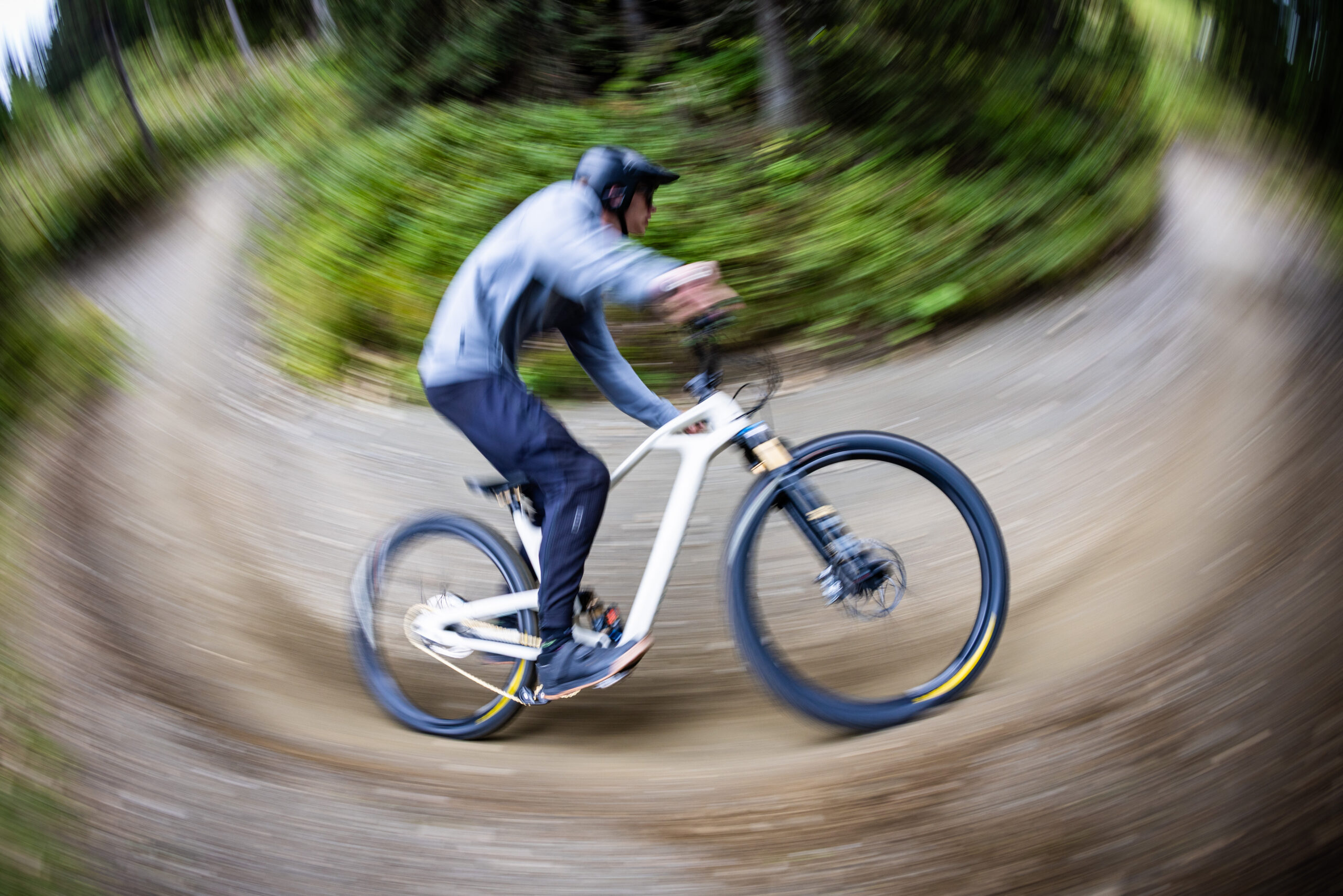
The wrong premium bike usually does not feel wrong in the parking lot. It feels impressive for ten minutes, efficient on the first fire road, and expensive everywhere. The real test comes later – in repeated hard braking, on long alpine descents, through wet weeks of riding, and after a season of service. That is where how to choose a premium mountain bike becomes less about badge value and more about engineering decisions that hold up under load.
At the high end, you are not simply buying lighter carbon, a larger cassette, or a more expensive fork. You are choosing a platform. That means the frame layout, suspension behavior, drivetrain concept, weight distribution, service requirements, and intended terrain all need to make sense together. Premium only means something if the bike performs as a complete system.
How to choose a premium mountain bike for your terrain
Start with where and how you actually ride, not with the spec sheet you admire most. Riders in steep, rough terrain need very different behavior than riders spending most of their time on rolling singletrack. A bike that feels lively and efficient on smoother trails can become nervous and under-gunned when speeds rise and impacts get heavier. On the other hand, a long-travel enduro platform can feel muted and unnecessarily demanding if your riding rarely justifies it.
If your rides regularly include sustained descending, repeated square-edge hits, and technical lines at speed, frame stability and suspension composure matter more than chasing the lowest possible weight. If you pedal all day on mixed terrain and value responsiveness, a more efficient chassis with sharper acceleration may serve you better. Premium buyers often assume they should buy the most aggressive option available. In practice, that can be a costly mismatch.
eMTB riders need the same honesty. Full-power assistance is not just about more torque. It changes pacing, average ride distance, climbing style, and the volume of descending you can fit into one outing. A light full-power eMTB can be an especially compelling middle ground because it preserves a more natural ride feel while still delivering meaningful support on steep or long climbs.
Geometry matters more than marketing
A premium frame should feel coherent on the trail. That starts with geometry, but not in the simplistic sense of chasing the slackest head angle or the longest reach. Numbers only matter in relation to travel, wheel size, rear center length, stack, and rider position.
A modern aggressive bike should place you in a centered stance with enough front-end confidence to stay composed in steep terrain, without making flat corners and slower sections feel detached. Reach that is too short can make a bike unstable when speeds rise. Reach that is too long can overload the rider and make line changes feel heavy. The same applies to chainstay length. Too short and the bike may feel exciting but imbalanced. Too long and it can lose agility where precision matters.
This is where premium design should justify itself. Better brands do not pursue geometry trends in isolation. They tune the whole chassis around intended use. If you are comparing options, look for signs that the frame was developed around real descending and real climbing, not just showroom appeal.
Suspension design separates serious bikes from expensive ones
When riders talk about ride quality, they often mean suspension more than they realize. Travel number alone tells you very little. Two bikes with the same rear travel can behave completely differently under power, braking, and repeated impacts.
A well-executed suspension platform should remain supportive when you push into turns and compressions, sensitive enough to maintain traction on off-camber surfaces, and controlled when speeds stack up. It should not wallow under pedaling load, nor should it feel harsh when the trail gets rougher than expected. Those trade-offs are never fully eliminated, but premium engineering narrows them considerably.
This is one area where experienced riders should pay close attention to system intent. Some bikes are designed to feel poppy and direct. Others prioritize calmness and grip in rough terrain. Neither approach is universally better. The correct choice depends on whether you value responsiveness or composure more, and how hard your trails push the bike.
La elección del sistema de transmisión influye tanto en el coste de mantenimiento como en el rendimiento
High-end buyers often focus on suspension and wheels first, but drivetrain architecture has a major influence on both ride feel and maintenance. A conventional derailleur setup still makes sense for many riders. It is familiar, widely serviceable, and can be very effective when well configured. But it remains exposed to impacts, contamination, and wear in ways that become frustrating if you ride often in wet, rocky, or muddy conditions.
That is why premium mountain bikes increasingly deserve a broader comparison. Gearbox systems, especially when paired with a carbon belt drive and electronic shifting, offer a very different ownership experience. Mass is centralized, the drivetrain is far less exposed, and maintenance requirements can be dramatically reduced. On rough descents, the reduction in unsprung mass at the rear wheel can also improve suspension behavior in a way experienced riders notice quickly.
There are trade-offs. A gearbox-driven bike can feel different at first, and some riders strongly prefer the familiar cadence transitions of a derailleur system. But if you value durability, consistency, and a cleaner long-term setup, drivetrain design should be part of how to choose a premium mountain bike, not an afterthought.
Motor integration should feel natural, not dominant
For eMTB buyers, the motor system deserves the same scrutiny as the frame. Peak power figures are easy to advertise, but they do not tell you how the bike behaves on technical climbs, how quietly it runs, or how naturally support engages and fades.
The best premium eMTBs are not the ones that feel most forceful in a parking lot test. They are the ones that stay balanced on awkward switchbacks, maintain traction on loose climbs, and remain composed when descending at pace. Weight, battery size, frame kinematics, and motor tuning all influence that outcome.
A lighter full-power eMTB is often the more sophisticated solution for performance-focused riders. You get meaningful assistance without turning the bike into a blunt instrument. That matters when trails are steep, corners are tight, and the ride needs to feel like mountain biking rather than managed propulsion.
Premium means build quality you can see later
A lot of manufacturing quality is invisible at first. Paint and finish are easy to admire. Harder to evaluate are tolerances, bearing protection, frame hardware, cable management, replacement part availability, and how the bike is supported after purchase.
Aquí es donde boutique European builders often distinguish themselves from mass-market brands. Smaller-scale, rider-led production tends to result in tighter control over detail, more deliberate component selection, and stronger continuity of support. That matters when you are investing in a frame platform you expect to ride for years, not one season.
Ask harder questions. Is the frame built around serviceable standards? Are the wear items easy to source? Is the hardware generic and replaceable, or proprietary and fragile? Does the company understand setup and ordering guidance, or simply ship inventory? Premium should mean confidence over time, not only at delivery.
Complete bike or frame-only?
Experienced riders should also decide whether they are buying a finished package or the right platform for a custom build. A complete bike can make sense when the specification has been selected intelligently as a system. A frame-only option is often better for riders with strong preferences around suspension, wheels, brakes, or cockpit dimensions.
There is no prestige in replacing expensive stock parts immediately. If you know you want a specific damper tune, wheel stiffness profile, or drivetrain concept, start with the platform that fits your goals rather than paying twice. Premium buying should be precise.
For riders looking at highly specialized platforms, this matters even more. A bike such as those built by INSTINCTIV makes the most sense when the buyer values the engineering concept itself – low-maintenance transmission options, highly refined frame behavior, and a design logic shaped by demanding alpine terrain – not just a luxury spec sheet.
Fit and setup still decide the outcome
Even the best frame can disappoint with the wrong size, bar width, crank length, spring rate, or tire choice. Premium bikes are usually capable enough to hide poor setup for a while, but never indefinitely. A size that looks modern on paper can still be wrong for your mobility, riding style, or local terrain.
That is why demo access matters. If you can ride before buying, do it. Not for a casual spin, but on terrain that exposes braking support, climbing traction, front-center confidence, and body position. If you cannot demo, work with a brand or specialist that can translate your riding history into a meaningful recommendation.
The right premium mountain bike should feel planted when the trail gets rough, efficient when you need to cover ground, and mechanically convincing long after the novelty fades. Choose the bike that solves the riding you actually do and the ownership experience you actually want, and the investment starts to make sense every time the trail points down.