



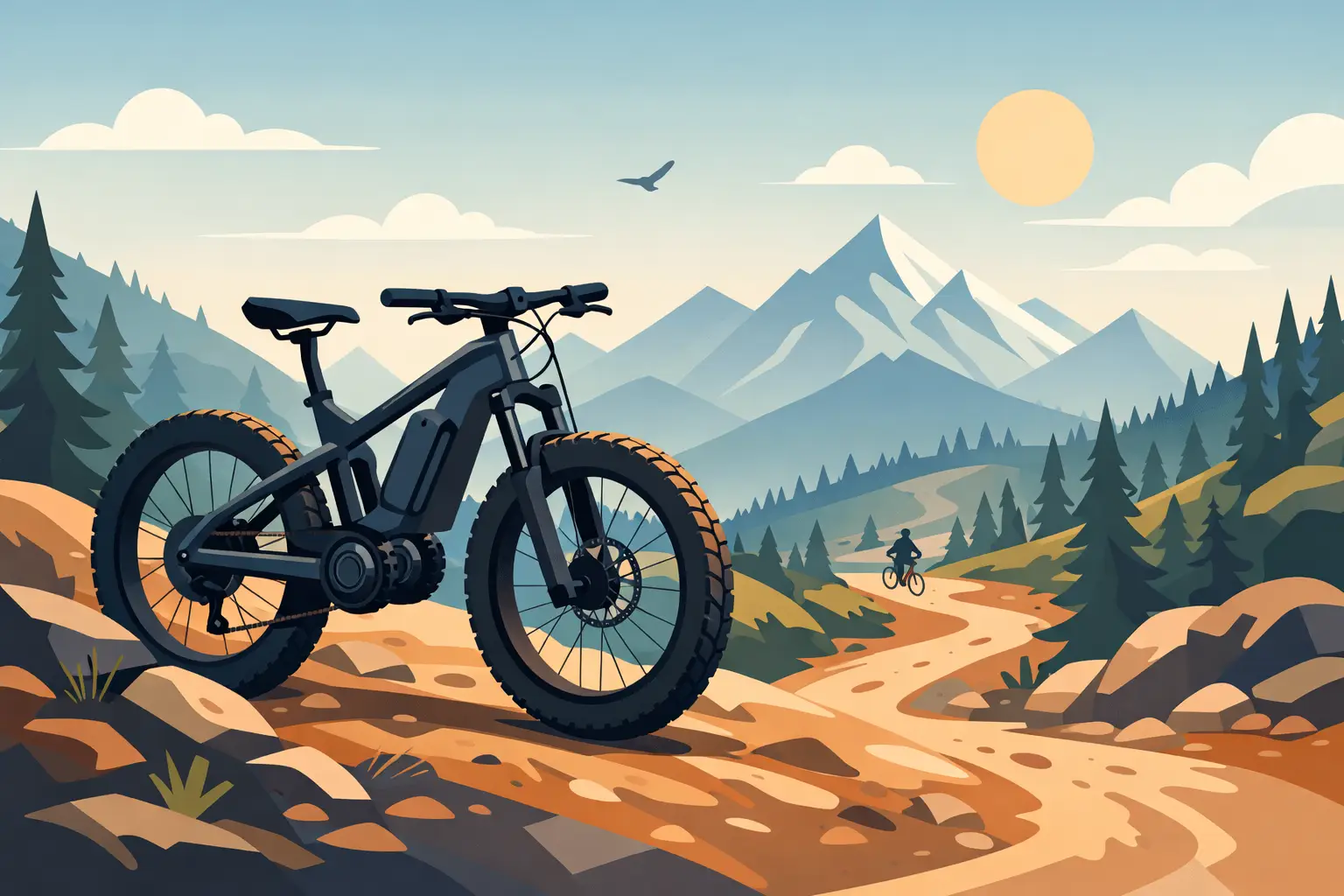
A steep, loose climb tells the truth faster than any spec sheet. The search for the most powerful mid drive ebike usually starts with a torque number, but on real trails that number is only one part of the story. What matters is how that power arrives, how long it stays consistent under load, and whether the bike still feels composed when the terrain turns technical.
For experienced riders, “powerful” should never mean crude. A serious eMTB needs enough support to clear awkward ledges, hold momentum through broken climbs, and carry speed on long alpine traverses without turning the bike into a blunt instrument. The best systems deliver force with control. They amplify rider input rather than overpower it.
What makes the most powerful mid drive ebike
A mid-drive motor has an inherent advantage for mountain biking because it drives through the bike’s gearing. That allows the motor to operate in a more efficient cadence range while multiplying torque at the rear wheel through the cassette or gearbox. On a climb, that matters more than peak output in isolation.
This is where marketing can blur the conversation. A motor may claim high torque, but if it surges at low cadence, overheats on extended grades, or forces awkward body positioning because of weight distribution, it will feel less capable than a slightly lower-rated system with better calibration. The most powerful mid drive ebike is not automatically the one with the largest headline number. It is the bike that converts motor output into usable trail speed and traction.
There are four factors that separate real performance from brochure performance. First is torque delivery. Smooth, well-metered assistance lets you stay planted on roots and off-camber rock rather than spinning out. Second is sustained output. Long climbs expose thermal management quickly. Third is integration. Motor behavior, battery placement, frame stiffness, suspension kinematics, and chainstay length all shape how the bike climbs. Fourth is noise and drag. A powerful system that feels rough or intrusive can diminish ride quality over a full day.
Torque matters, but control matters more
It is easy to fixate on 85 Nm, 90 Nm, or beyond. On paper, more torque sounds like a simple hierarchy. On trail, it depends on terrain and rider intent.
High torque is genuinely useful for steep access roads, loaded bikepacking setups, and technical climbs where you need support at low speed. Riders in mountainous regions will appreciate extra reserve when the grade stays punishing for an hour rather than five minutes. But there is a threshold beyond which raw output becomes difficult to use cleanly, especially in slippery conditions. If the rear tire breaks traction every time assistance ramps in, the system is not helping you climb better.
That is why refined motor tuning matters so much. The strongest bikes are not simply fast in Turbo. They are predictable in technical sections, easy to modulate when ratcheting through rock steps, and natural enough that you can still choose lines rather than react to the motor. For skilled riders, that distinction is not subtle.
Why mid-drive power feels different on mountain bikes
Hub motors can produce strong acceleration, but they are fundamentally less suited to high-performance trail riding. A mid-drive centralizes mass, works through the drivetrain, and keeps the wheel response lighter. On a mountain bike platform, this translates to better suspension behavior, more balanced handling, and superior climbing under varied cadence and grade.
The most powerful mid drive ebike also tends to feel more composed because the motor sits low and near the center of the frame. That placement improves directional stability and reduces the pendulum effect that can make heavier bikes feel vague in tight terrain. It also gives engineers more freedom to build suspension layouts around traction rather than around a compromised drive unit location.
This is why serious riders should assess the bike as a complete system. A strong mid-drive in a mediocre chassis will never ride as well as a well-integrated platform with slightly less headline aggression but better balance, geometry, and suspension support.
The trade-off between peak power and ride quality
There is no free power. More output usually brings consequences in heat, battery consumption, weight, drivetrain load, or abruptness in support. If a bike is tuned to feel explosive everywhere, it may also feel tiring, noisy, and less precise over a long day.
For many riders, the better question is not “Which bike has the highest number?” but “Which bike stays fast and controlled where I actually ride?” Tight, technical singletrack rewards smooth engagement and low-speed accuracy. High-speed fire road climbing may favor outright force. Big mountain riding often demands both, plus enough efficiency to preserve range.
This is where lightweight full-power systems have shifted expectations. A well-executed setup can deliver serious assistance without the disconnected feel that defined many early eMTBs. When the bike remains agile, quiet, and mechanically coherent, the riding experience improves in ways that matter more than another marginal bump in peak torque.
Battery, thermal stability, and sustained climbing
A powerful motor is only as useful as the battery and cooling strategy behind it. Riders in alpine terrain know the difference between a bike that feels impressive for ten minutes and one that keeps delivering on a thousand-yard climb.
Thermal management is especially important with compact high-output systems. If the motor reduces assistance once temperatures rise, real-world climbing speed drops regardless of the published rating. The same applies to battery discharge behavior. Strong support at high load demands stable power delivery, not just nominal watt-hours.
Range also changes how usable that power really is. A bike with aggressive output and poor efficiency may be exciting on short rides but limiting for back-to-back laps or long point-to-point days. Serious buyers should think in terms of riding profile. If your terrain is steep, sustained, and remote, sustained support and smart energy use matter more than a dramatic first impression in the parking lot.
Frame design determines whether power is usable
The motor does not climb the trail by itself. Geometry, suspension, anti-squat behavior, rear-center length, and overall frame stiffness determine whether that power reaches the ground cleanly.
On steep technical ascents, a front end that wanders or a rear suspension layout that squats excessively can waste even the strongest motor. Likewise, a frame that feels vague under load reduces confidence when climbing over embedded rock or wet roots. The best eMTBs are engineered so the extra drive force enhances the chassis rather than exposing weaknesses in it.
This is also where boutique engineering still matters. A hand-built, performance-led platform can be optimized around ride feel instead of broad market compromise. Lightweight full-power bikes such as the INSTINCTIV Ocelot make that case well – not by chasing a crude power narrative, but by combining a sophisticated drive system with a frame built for demanding real terrain.
Gearbox and drivetrain considerations
If you are evaluating the most powerful mid drive ebike, drivetrain durability belongs in the conversation. Strong mid-drives place significant load through the transmission. Conventional derailleur systems can work very well, but they are more exposed to wear, impact, and contamination, especially in wet, rocky environments.
This is one reason some premium riders are moving toward gearbox-based platforms with belt drive. The appeal is not novelty. It is lower maintenance, cleaner shifting performance in poor conditions, and more consistent ownership over time. For high-mileage riders who use motor assistance aggressively, that mechanical stability can be as valuable as another increment of peak output.
There is a trade-off. Gearbox systems introduce their own feel and packaging considerations, and they are not the default solution for every rider. But if your priorities include durability, silence, and reduced workshop time, they deserve serious attention.
How to choose the right kind of powerful
The right bike depends on what kind of power you need. If your rides are steep, technical, and traction-limited, look for controlled low-cadence support and excellent chassis balance. If you ride long mountain routes, prioritize sustained output, battery efficiency, and heat stability. If you want a bike that still feels alive on descents, pay close attention to overall weight, mass centralization, and suspension quality.
It also helps to be honest about riding style. Some riders want maximum shuttle replacement. Others want a more natural mountain bike with meaningful assistance. Both are valid, but they lead to different conclusions. The strongest choice is the one that fits your terrain and technique, not the one that wins a spec-sheet argument.
A good demo will reveal more than a week of reading. Focus on how the bike starts on a steep pitch, how easily it maintains traction, how quiet it is under load, and whether the handling stays precise when the motor is working hard. If those pieces are right, the power will feel real.
The most compelling eMTBs are not memorable because they are merely forceful. They stand out because they turn that force into speed, control, and less compromise over an entire ride. That is the kind of power worth paying for.