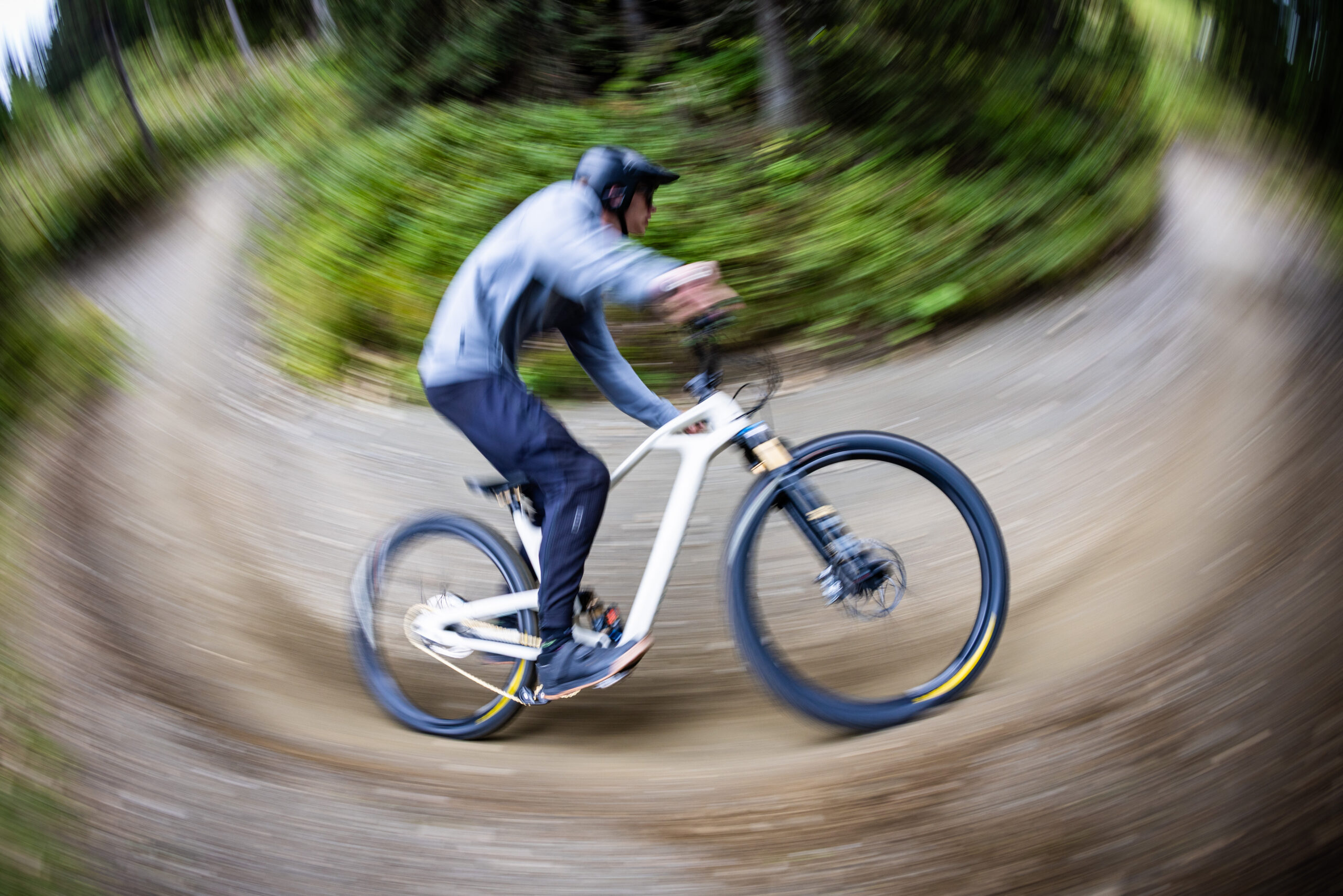
A bike can look impressive on a spec sheet and still feel ordinary on the trail. Serious riders know the difference the moment speed builds, the line gets rough, and the chassis starts telling the truth. That is where handmade mountain bikes earn their place. Not as nostalgia pieces or workshop curiosities, but as performance tools built with more control, more intent, and usually far less compromise than mass-market platforms.
At the premium end of the market, hand-made production is not about romance. It is about precision, consistency, and the freedom to build a bike around ride quality rather than factory convenience. For riders who care about tracking, suspension behavior, drivetrain refinement, and long-term ownership, that matters.
What handmade mountain bikes really mean
The term gets used loosely, so it helps to be precise. Handmade mountain bikes are not simply bikes with a boutique logo or a small production run. In the proper sense, they are designed, built, and finished with substantial human involvement at critical stages – frame fabrication, alignment, bonding or welding, finishing, assembly, and final quality control.
That does not mean every step is manual and every machine-built bike is inferior. CNC machining, advanced composites, hydroforming, and automated cutting all have their place. The real distinction is where control sits. In a handmade bike program, the builder typically retains tighter oversight over tolerances, frame prep, finishing details, and final build decisions. That tends to produce a more coherent product, especially when the company designs for a specific riding environment rather than a global average.
For aggressive trail, enduro, and eMTB riders, that coherence shows up in ways that matter – calmer tracking at speed, cleaner load transfer through corners, fewer drivetrain distractions, and a chassis that feels settled instead of merely stiff.
Why ride feel is different on handmade mountain bikes
The best handmade mountain bikes are not defined by being harsh, ultra-light, or visually extravagant. They are defined by how deliberately they manage competing demands. A high-end mountain bike has to be laterally precise without becoming nervous, supportive under power without feeling dead, and durable enough for real terrain rather than showroom use.
Mass production tends to reward standardization. That is efficient, but efficiency can flatten nuance. Frame shapes may be driven by tooling limits, common hardware choices, or assembly-line priorities. Handmade production gives a builder more freedom to prioritize suspension layout, weight distribution, tube profiles, integration, and serviceability around the intended ride experience.
That matters even more once a bike gets fast. On demanding terrain, the quality of a frame platform is not measured only by stiffness numbers. It is measured by whether the bike stays composed under braking, whether the rear suspension remains active when the drivetrain is loaded, and whether the front and rear of the bike feel synchronized rather than separate. Those traits rarely happen by accident.
The engineering advantage of smaller-scale production
There is a practical reason experienced riders keep coming back to specialist builders. Smaller-scale production often allows better engineering decisions to survive the path to market.
A large brand may have strong engineering talent, but it also has wider model ranges, cost targets, supply constraints, dealer requirements, and annual product cycles. A specialist builder can be more selective. It can focus on a narrower range of bikes and refine those platforms around clear use cases.
That is especially relevant with advanced systems. Full-power eMTBs, gearbox-driven mountain bikes, and belt-drive setups ask more of the frame than a conventional derailleur build. Packaging, suspension kinematics, unsprung mass, noise control, sealing, and weight distribution all become more critical. On a bike like that, hand-made production is not just aesthetic. It gives the builder more authority over how the whole system functions together.
When that work is done well, the result is a bike that feels unusually quiet, direct, and composed. There is less of the mechanical clutter that riders often accept as normal.
Handmade does not automatically mean better
It is worth being honest here. Handmade is not a magic word. A poorly designed hand-built frame is still a poorly designed frame. Some boutique bikes lean too heavily on exclusivity and too little on testing, support, or long-term parts strategy.
The real question is whether the builder uses hand-made production to solve meaningful problems. Does it improve frame accuracy? Does it enable more sophisticated integration? Does it support lower-maintenance drivetrain solutions? Does it make the bike easier to own over several seasons of hard riding?
If the answer is no, you may just be paying for scarcity. Premium riders should be skeptical of that.
The strongest examples combine craftsmanship with systems thinking. They pair frame design with proven suspension behavior, high-end regional component sourcing, and technologies that reduce service burden rather than adding novelty. In that sense, the value of a handmade mountain bike is not just that it is rare. It is that it feels resolved.
Where handmade mountain bikes make the most sense
Not every rider needs one. If your priorities are low initial cost, broad dealer availability, and frequent model turnover, a mainstream bike can make more sense. There are excellent production bikes on the market.
But handmade mountain bikes become compelling when your priorities shift toward long-term ownership and performance depth. Riders who notice drivetrain drag, chain slap, frame noise, vague rear-end behavior, or inconsistent build quality are usually the ones who benefit most. The same goes for riders putting serious mileage on eMTBs, or anyone riding steep, rough terrain where chassis behavior is exposed quickly.
In those cases, the premium often buys something tangible – better integration, better finishing, more considered component pairing, and often a cleaner ownership experience. A gearbox with belt drive, for example, can dramatically reduce maintenance compared with a traditional derailleur setup, but only if the frame is engineered around it properly. Likewise, a lightweight full-power eMTB only works if motor integration, battery placement, and suspension balance have been handled with restraint and precision.
That is where European specialist builders often stand out. Their advantage is not geography by itself. It is the combination of close control over production, deep knowledge of demanding alpine riding, and a willingness to build fewer bikes with more intent.
The difference between luxury and engineering value
Premium mountain bikes can drift into luxury signaling. Handmade should not.
There is a useful distinction between expensive details and valuable details. Anodized accents, polished finishes, and limited-edition paint may look good, but they are secondary. The engineering value sits elsewhere – in alignment accuracy, suspension consistency, noise reduction, service access, hardware quality, and drivetrain longevity.
For a serious rider, a hand-made bike justifies itself when it delivers speed with less distraction. You spend less time managing mechanical issues and more time focusing on line choice, braking points, and body position. The bike disappears in the right way.
That is also why direct specialist brands have become more credible in the premium category. Without trying to satisfy every rider, they can support a focused customer with demos, build guidance, frame-only options, and a clearer explanation of why the platform exists. For riders who know exactly what they want, that is often more valuable than a crowded showroom.
How to judge a hand-made bike before you buy
Look past the headline claim. Ask what the builder controls in-house and why that matters. Ask how the frame was developed, what terrain shaped the geometry, and how the suspension platform behaves under braking and climbing load. Ask how the drivetrain choice affects maintenance over a full season, not just in the first month.
Then look at the complete system. Does the build spec support the character of the frame, or is it there to win comparisons on paper? Are the travel options coherent? Is the bike designed around durability as much as showroom weight? Can the brand support original parts, setup questions, and service over time?
A serious hand-made platform should have convincing answers. It should feel specific, not generic. It should reflect a builder that understands how expert riders actually use bikes.
That is ultimately why brands such as INSTINCTIV resonate with a certain kind of customer. Not because hand-made sounds exclusive, but because exclusivity is paired with technical clarity, regional manufacturing discipline, and bikes designed around real mountain riding rather than mass-market compromise.
If you are considering one, the right question is not whether handmade mountain bikes are worth more in the abstract. It is whether the builder has used that freedom to create a bike that rides better, lasts longer, and asks less of you when conditions get rough. When the answer is yes, the premium stops looking indulgent and starts looking rational.