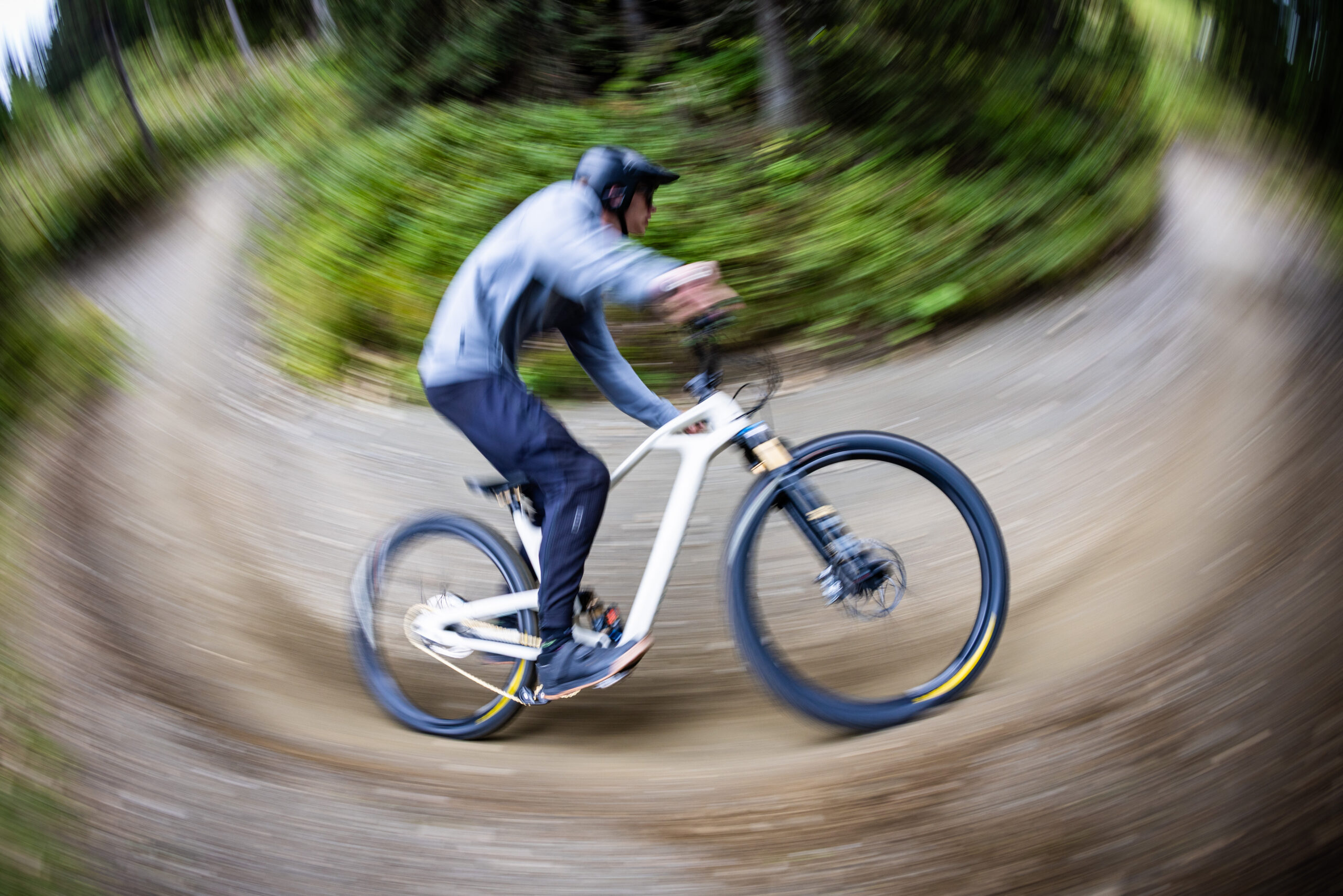
If you are shopping the best premium eMTBs for enduro, you are probably past spec-sheet theater. At this level, the real question is not which bike has the biggest battery or the loudest launch headline. It is which platform stays composed when speeds rise, keeps traction on awkward climbs, and still feels precise after a full season of hard use.
That narrows the field quickly. Premium enduro eMTBs are not simply trail bikes with more travel and a motor bolted in. The best ones are integrated systems. Frame stiffness, motor response, weight distribution, suspension kinematics, wheel path, brake stability, and serviceability all have to work together. When they do, the bike disappears underneath you. When they do not, no amount of premium branding fixes it.
What defines the best premium eMTBs for enduro
A proper enduro eMTB should feel calm at speed without becoming vague in slower, technical terrain. That sounds obvious, but it is where many expensive bikes miss the mark. Some platforms chase downhill confidence with long wheelbases and heavy front ends, then become stubborn on tight switchbacks. Others feel lively at lower speeds but start deflecting once the trail gets rough and fast.
The best premium builds solve this with balance rather than exaggeration. Geometry needs enough reach, stack, and front-center stability for steep terrain, but with chainstay length and weight distribution that keep the rear wheel loaded on climbs. Suspension has to offer support in the mid-stroke, not just big-hit forgiveness. Enduro riding on an eMTB is full of repeated compressions, square-edge impacts, and braking loads. A bike that sits too deep in its travel can feel impressive in the parking lot and imprecise on real terrain.
Motor character matters just as much. Full-power systems are still the right choice for most enduro-focused riders because they let you repeat big descents, clear technical transitions, and carry speed uphill without draining the bike after one long loop. But peak torque alone is not the whole story. Modulation, noise, drag, thermal behavior, and how naturally support builds under load are what separate a refined system from one that feels like a blunt instrument.
Choosing by ride feel, not just spec
The premium end of the market often looks crowded because many bikes share similar travel numbers, wheel sizes, and motor outputs. On trail, they can be very different.
Some bikes lean toward maximum plow capability. These are excellent if your terrain is consistently steep, rough, and fast, and if you prefer a bike that settles into the ground. The trade-off is that they can feel less responsive on flatter singletrack or more effortful when you want to change lines quickly.
Others aim for a lighter, more dynamic feel. These tend to reward active riding, especially in mixed terrain with repeated accelerations, awkward corners, and technical climbing. The risk here is that some lightweight full-power bikes save grams in the wrong places and lose the composed, planted quality that makes an enduro eMTB worth owning.
That is why serious buyers should pay close attention to how a frame carries its weight. A well-executed premium platform can feel significantly lighter than the scale suggests because mass is centralized, the front wheel stays calm, and the suspension does not waste energy. Conversely, a bike with an attractive claimed weight can ride heavier if the chassis is noisy, unbalanced, or overly reactive.
Motor systems and battery strategy
For enduro use, the best motor is usually the one you stop noticing. Smooth engagement is more valuable than a dramatic surge. On technical climbs, especially on loose or wet terrain, abrupt support can break traction and force you to fight the bike. A refined drive unit lets you stay centered and let the rear tire work.
Battery size is another area where there is no single right answer. If your riding involves full alpine days, repeated uplift-style laps, or cold-weather elevation, larger capacity still makes sense. If your priority is handling and a more agile chassis, a lighter full-power system paired with efficient support delivery can be the better enduro choice. It depends on whether your local reality is all-day range anxiety or repeated high-intensity descents where lower system weight pays back every minute.
This is also where premium engineering starts to justify itself. Better integration, smarter packaging, and more thoughtful cooling can make a lighter bike feel every bit as capable for real enduro use as a heavier competitor with a bigger number on paper.
Frame platform, suspension, and drivetrain decisions
When riders compare the best premium eMTBs for enduro, they often start with travel. That is useful, but not enough. A 160 mm bike with strong mid-stroke support and a composed rearward axle path can outperform a softer 170 mm bike that wallows under power or folds under braking.
Anti-squat and anti-rise are worth understanding here. Too much anti-squat can make the rear end feel busy on technical climbs, especially with motor assistance amplifying chain forces. Too little, and the bike can feel lazy and disconnected. Similarly, braking behavior matters more on a heavy, fast eMTB than on an analog bike. If the rear suspension locks up under hard braking, traction disappears exactly when you need it most.
Drivetrain design is another dividing line in the premium segment. Traditional derailleur systems still dominate, and they are familiar, relatively light, and easy to tune. But they remain exposed to impacts, contamination, and wear, especially when used hard in wet, rocky terrain. For riders who value low maintenance and consistent shifting under load, gearbox-based systems deserve serious attention. They change the weight distribution, reduce unsprung mass at the rear wheel, and remove the vulnerable derailleur from the equation. The trade-off is different ride feel, more initial adjustment to the system, and in some cases a higher upfront cost.
That trade-off can be well worth it if your priority is durability, quiet operation, and long-term ownership quality rather than standard-market familiarity.
Premium means more than expensive parts
A genuine premium enduro eMTB is not defined by carbon wheels and wireless shifting alone. Those details can be excellent, but they are finishing touches. The real premium value is in the platform itself.
Look for frame design that feels intentional rather than trend-driven. That includes sensible cable and hose routing, protection where impacts actually happen, bearings and pivots that can be serviced without drama, and geometry that reflects enduro riding at speed, not showroom impressions. Build quality matters too. Frame alignment, small-part fit, and consistency from bike to bike are not glamorous topics, but they shape the ownership experience as much as any headline feature.
This is one reason boutique European builders continue to attract experienced riders. When a bike is designed around demanding terrain and built with a clear engineering thesis, it tends to feel more coherent. On a well-resolved platform, every component choice makes sense because it supports the same outcome – stability, speed, traction, and durability.
A good example of that philosophy is a lightweight full-power approach built around a refined motor system, carefully managed frame weight, and suspension intended for aggressive descending rather than catalog positioning. In that context, a bike like the INSTINCTIV Ocelot stands out not because it tries to out-shout the category, but because it treats the eMTB as a complete performance platform.
Who should buy what
If your riding is primarily bike-park laps, steep fall-line trails, and high-speed descending, a heavier, ultra-planted bike with longer travel may still be the right call. You will give up some agility, but gain confidence when things get rough and fast.
If you ride mixed enduro terrain with technical climbs, repeated direction changes, and long natural descents, a more balanced premium eMTB usually makes more sense. This is the sweet spot for riders who want one bike that feels efficient on the way up and genuinely sharp on the way down.
If you are tired of derailleur wear, drivetrain noise, and frequent maintenance, it is worth looking beyond conventional layouts. Gearbox and belt-drive systems are not niche for the sake of being niche. For the right rider, they solve real problems and produce a cleaner, quieter bike with a different kind of precision.
How to evaluate before you buy
At this level, test rides matter more than internet consensus. Pay attention to how the bike enters corners, how much effort it takes to lift the front wheel, and whether the rear end stays active under braking. Ride a technical climb in a support mode you would actually use, not just the maximum setting. Notice motor noise, transition behavior, and whether the chassis feels calm when the trail gets chaotic.
Then think past day one. Ask how the bike will age after a wet winter, a full race season, or a summer of park days. Premium should mean fewer compromises over time, not just better photos at launch.
The best enduro eMTB is the one that matches your terrain, your speed, and your tolerance for maintenance. Choose the platform that feels composed rather than impressive, and you will still be happy with it long after the new-bike glow wears off.