

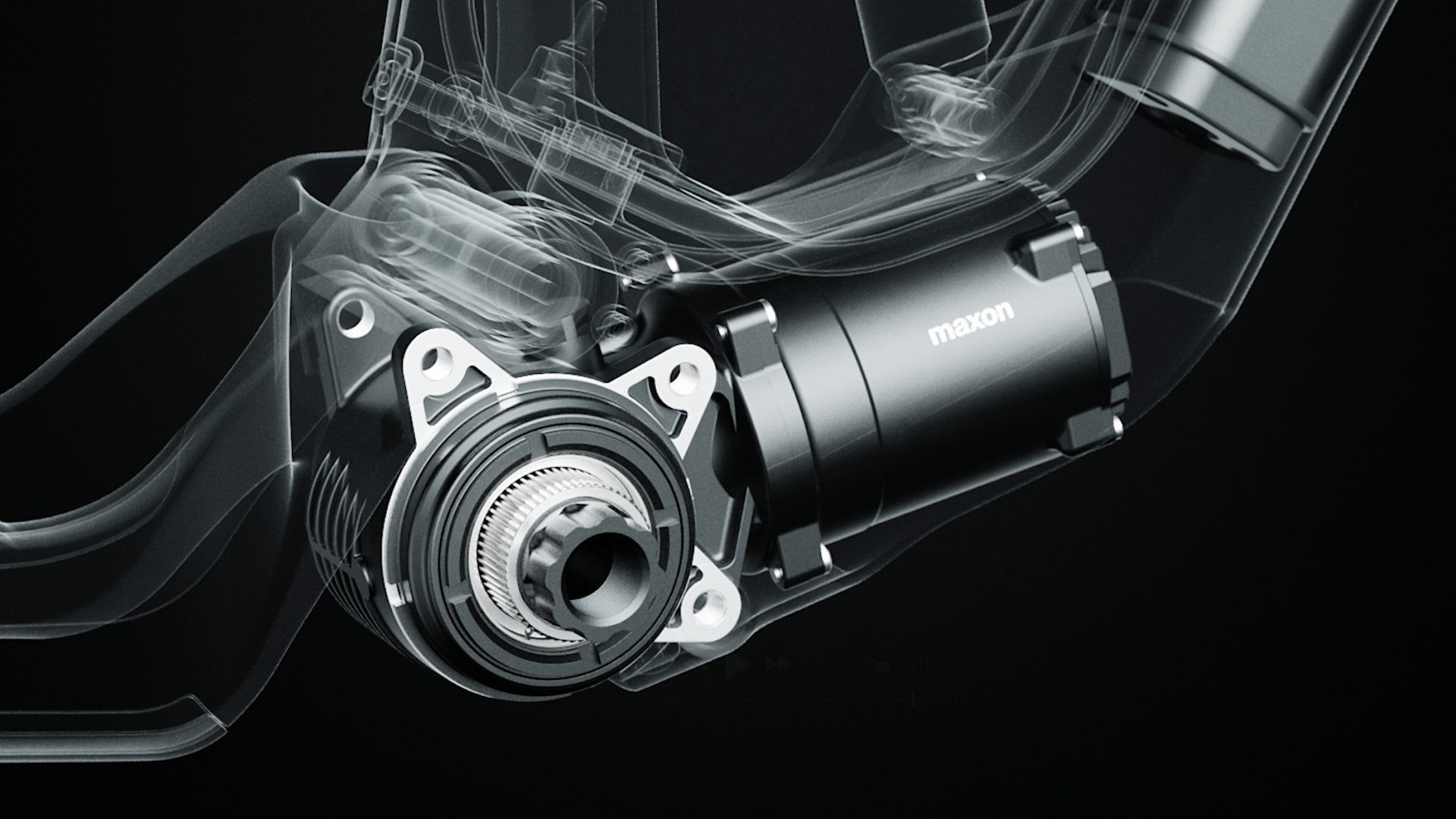
Some e-bike systems impress on paper and disappoint on trail. The maxon bikedrive air s tends to do the opposite. Its numbers matter, but what stands out more is how quietly and precisely it supports the rider when pace, traction, and line choice actually matter.
That distinction is increasingly relevant in the premium eMTB category. Riders spending serious money on a bike are rarely chasing motor output alone. They want a platform that climbs with control, descends without compromise, and does not burden the chassis with unnecessary mass or drag. In that context, the maxon bikedrive air s is not just another drive unit. It is a specific answer to a specific brief: full-power assistance in a lighter, more refined package.
Why the maxon bikedrive air s stands out
The most obvious talking points are familiar enough: compact packaging, low system weight, and a clean integration path for high-end carbon frames. But those features only matter if they lead to a better ride. With the AIR S, they do.
This system was developed with a clear emphasis on efficiency and ride quality rather than headline-chasing bulk. The motor delivers substantial torque for steep technical climbing, yet it avoids the heavy, overdriven character that can make some full-power eMTBs feel detached from the trail. Instead, support comes on with a measured, highly controlled response. That matters when traction is limited, cadence is changing quickly, and the rider is trying to place the rear wheel over roots or ledges rather than simply winching uphill.
There is also the issue of system mass. Add enough weight to a frame and every part of the bike changes – suspension behavior, corner entry, mid-air balance, braking load, and the general sense of agility. The AIR S sits in a very attractive zone because it gives meaningful support without forcing the bike into the deadened feel that some heavier powertrains create. For aggressive trail and enduro riders, that balance is not a marketing detail. It is the difference between an eMTB that still rides like a performance mountain bike and one that simply happens to be fast uphill.
Ride feel matters more than peak numbers
Motor comparisons often get reduced to torque figures and battery capacity. Those numbers have value, but experienced riders know they rarely tell the whole story. What separates a good drive system from a great one is how naturally it translates rider input into forward motion.
The maxon bikedrive air s has earned attention because its support character feels deliberate rather than abrupt. On loose climbs, that means less wheelspin and less need to modulate your own effort around an overeager motor. On rolling terrain, it means the bike keeps momentum without feeling like it is surging independently of the rider. On longer rides, it means less fatigue from constantly managing excess assistance.
That controlled behavior also affects descending, even when the motor is not the main actor. A lighter, more compact unit gives frame engineers more freedom with kinematics, center of gravity, and packaging around the bottom bracket area. The result can be a chassis that feels more composed and more intuitive at speed. That is where sophisticated drive systems justify themselves. They do not just add power. They preserve the integrity of the bike.
Noise is part of this discussion too. Many experienced riders are surprisingly sensitive to drivetrain and motor sound, especially on premium builds where every other component has been chosen for refinement. A quieter system keeps the riding experience cleaner. You hear tires, terrain, and trail feedback instead of constant mechanical presence. That is not cosmetic. It changes how connected the bike feels.
Weight, integration, and the premium eMTB brief
The AIR S fits best when the bike itself has been designed around the system rather than adapted to accept it. That sounds obvious, but the difference is significant.
A purpose-built frame can use the compact dimensions of the motor to optimize suspension layout, chainstay shape, and battery integration without awkward compromises. It can keep proportions tight, protect handling, and avoid the visual bulk that often comes with high-capacity e-bike packaging. For riders who care about design integrity as much as outright function, this matters.
It also supports a more sophisticated build philosophy. A lighter drive system allows the rest of the bike to stay performance-focused. You are not forced into overbuilt choices everywhere else just to compensate for a very heavy motor-battery package. Wheels can remain responsive. Suspension can be tuned for grip and support rather than simply carrying excess mass. The complete bike can feel fast rather than merely powerful.
There is, however, a trade-off. Riders who want the absolute largest battery and the most extreme all-day range at maximum support may find heavier systems more aligned with their priorities. That is the usual compromise. The AIR S makes more sense for riders who care about the total ride package and who understand that usable performance is not the same thing as the biggest possible numbers.
Where the maxon bikedrive air s makes the most sense
This system is particularly compelling for strong riders who want assistance to extend their range, increase vertical gain, and sharpen repeatability on demanding terrain without giving up the handling standards of a serious mountain bike.
That includes riders who spend time on steep alpine climbs, technical traverses, and rough descents where chassis balance matters as much as motor output. It also suits buyers moving from acoustic enduro bikes who want e-assistance but are wary of the cumbersome feel some full-power eMTBs bring with them. The AIR S offers a more convincing bridge because it supports aggressive riding rather than redefining it.
It is also well suited to brands and builders that take system integration seriously. On a premium frame, the benefits become clearer: lower visual mass, cleaner packaging, and a ride character that feels engineered rather than assembled from parts. In that setting, the motor is not the headline. It is one element in a coherent performance platform.
For that reason, the AIR S belongs naturally on exclusive, high-end eMTBs where handling precision, low noise, and refined power delivery are part of the brief from the start. On a bike such as the INSTINCTIV Ocelot, that kind of system choice aligns with a broader engineering philosophy – one centered on ride quality, technical climbing control, and a complete build that feels considered at every level.
What buyers should look at beyond the spec sheet
If you are evaluating an AIR S-equipped bike, the useful questions are not limited to torque, battery watt-hours, or claimed weight. Look at how the frame uses the system. Look at the suspension kinematics under power. Look at the bike’s center of gravity and how naturally it manuals, changes direction, and settles into rough terrain.
Pay attention to support tuning and transition behavior as cadence rises or falls. A premium system should feel intuitive in awkward moments, not just impressive in a parking lot test. Technical climbing is often the clearest proof. If the bike lets you stay relaxed and accurate over uneven terrain, the motor tune is probably doing its job.
The ownership side matters too. Premium buyers should expect clean integration, thoughtful protection, dependable software behavior, and a build standard that matches the quality of the drive unit. A sophisticated motor cannot rescue a mediocre platform. Conversely, a well-executed chassis can reveal just how capable the AIR S really is.
That is the right frame for judging this system. Not as an isolated motor, but as part of a complete eMTB architecture aimed at riders who notice the difference between brute force and engineered performance.
The real appeal of the AIR S
The strongest argument for the maxon bikedrive air s is not that it dominates every category. It does not. Its appeal is more selective, and that is exactly why it stands out.
It favors riders who want an eMTB to remain a mountain bike first – fast, composed, and precise – while gaining enough assistance to turn bigger terrain into something repeatable. That is a more demanding brief than simply adding power, and not every system meets it.
For serious riders, that selectivity is a strength. The best equipment is rarely the broadest. It is the one that solves the right problem with the fewest compromises. If your priority is a premium eMTB that climbs with authority and still feels sharp when the trail opens up, the AIR S is easy to take seriously.
The smartest way to judge it is simple: forget the noise around category labels and look at what happens on real terrain. If the bike feels light under you, calm on technical climbs, and properly alive on the descent, the drive system is doing exactly what it should.